イベルメクチン創薬(がん)
Ivermectin-Based Drug DiscoveryーCancer

- 専門分野
-
- 小児腫瘍学
- 小児血液学
- 小児科学
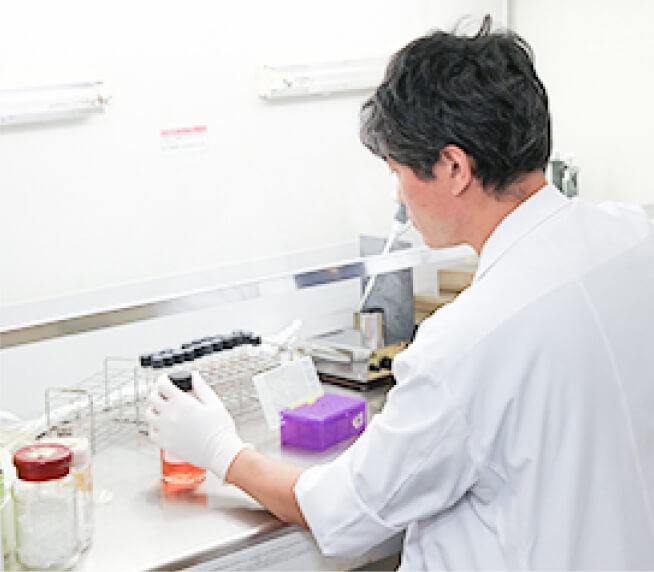
急性リンパ性白血病の治療成績は向上していますが、依然として完治が難しい病型も存在し、安全かつ有効な治療薬の開発が求められています。私たちは、100株以上の多様な白血病細胞株を用いて研究を進めており、世界有数の細胞株バンクを構築しました。2024年には大学附属の白血病研究資源センター(Glean)を設立し、細胞株の保全と研究利用を推進しています。既存薬の感受性やゲノム情報を網羅したデータベースを活用し、イベルメクチン誘導体の治療効果やその機序を解析しています。また、造血幹細胞移植による免疫効果との相乗作用も評価し、難治性白血病の克服に向けた新規治療法の開発に取り組んでいます。
Although treatment outcomes for acute lymphoblastic leukemia (ALL) have improved, certain subtypes remain difficult to cure, and the development of safe and effective therapies is still urgently needed. We are conducting research using over 100 diverse leukemia cell lines and have established one of the world’s leading cell line banks. In 2024, we launched the university-affiliated Leukemia Research Resource Center (Glean) to promote the preservation and research use of these cell lines. By integrating our comprehensive database of drug sensitivity profiles and genomic information, we are analyzing the therapeutic efficacy and mechanisms of ivermectin derivatives. Furthermore, we are evaluating synergistic effects with immune responses induced by hematopoietic stem cell transplantation, aiming to develop novel therapies to overcome refractory leukemia.

- 専門分野
-
- 小児血液腫瘍
小児がんの治療成績は、抗がん剤による化学療法、放射線療法、手術療法を組み合わせた集学的治療の進歩により向上していますが、進行期の神経芽腫、横紋筋肉腫、悪性ラブドイド腫瘍などの難治性小児がんにおいては依然として不良です。また、小児がんの多くは成人がんで使用されている免疫チェックポイント療法の効果も乏しく、現在、新たな治療法の開発が強く求められています。
我々の研究室はこれらの難治性小児がんの細胞株を保有しており、これらを用いてNK細胞などの免疫細胞やエピゲノム制御阻害剤、抗アポトーシス抑制タンパク質抗体などによる抗腫瘍効果について検討してきました。
イベルメクチンは主に成人のがんを対象とした研究において、様々な機序による抗腫瘍効果が報告されており、小児難治性腫瘍に対しても同様の効果が期待されます。そこで、小児腫瘍細胞株を用いて、イベルメクチン誘導体による抗腫瘍活性とその機序について検討し、新規薬剤の開発に繋げたいと考えております。

Treatment outcomes for pediatric cancers have improved through advances in multidisciplinary therapy, which combines chemotherapy, radiation therapy, and surgery. However, the prognosis remains poor for refractory pediatric cancers such as advanced neuroblastoma, rhabdomyosarcoma, and malignant rhabdoid tumors. Moreover, many pediatric cancers respond poorly to immune checkpoint therapies commonly used in adult cancers, highlighting the urgent need for new treatment strategies.
Our laboratory possesses cell lines derived from these refractory pediatric cancers and has been investigating their antitumor responses to natural killer(NK) cells, as well as epigenetic inhibitors, and antibodies targeting anti-apoptotic proteins.
Ivermectin has shown antitumor effects through various mechanisms in adult cancer studies, and similar effects are expected in pediatric refractory tumors. Therefore, we aim to explore the antitumor activity and mechanisms of ivermectin derivatives using pediatric tumor cell lines, with the goal of developing novel therapeutic agents.
